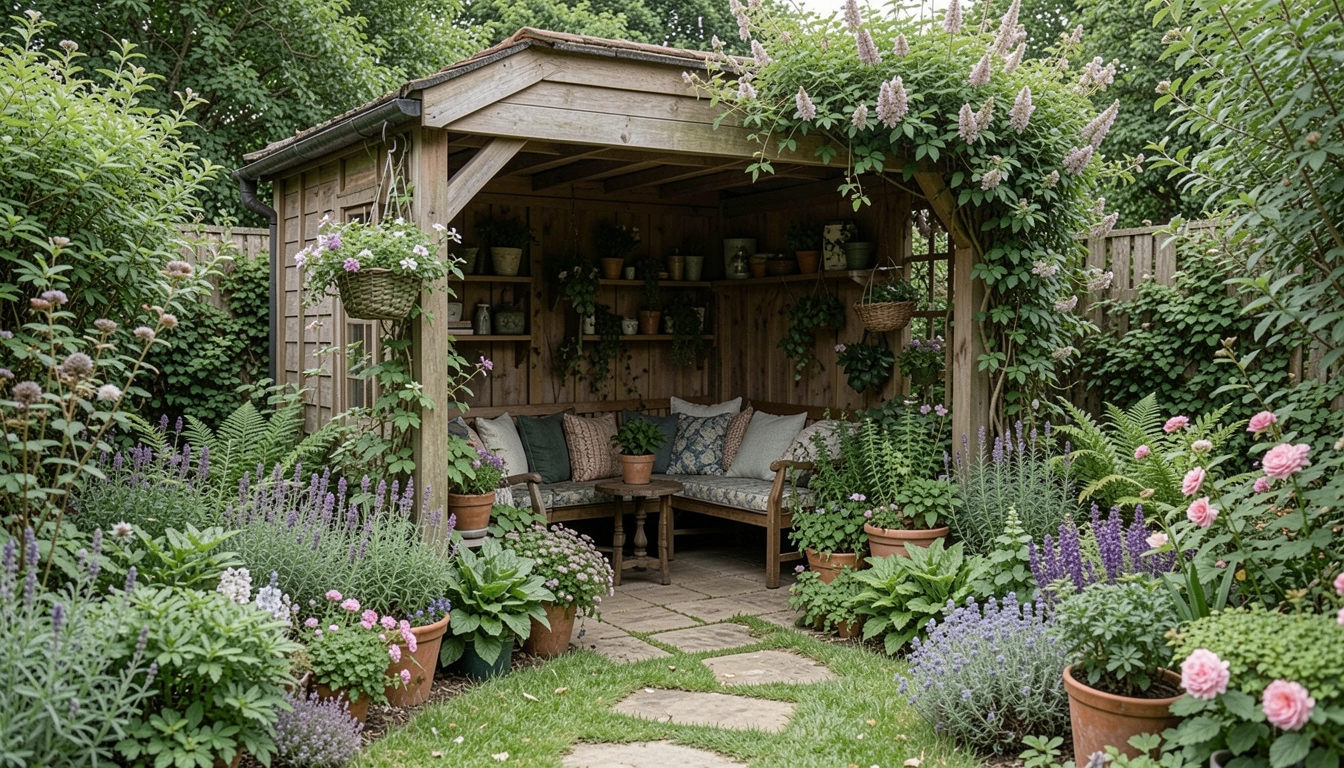
I stared at my garden shed one spring morning. It sat there plain and boxy, pulling the whole yard off balance. The cottage feel I wanted just wasn't there.
I'd tried pots around it before. They tipped over in wind, looked forced. The shed needed to blend, not stand out.
Now, after a few tries, it fits. Warm plants climb it. The space flows easy.
How to Design Cottage Garden Shed Beautifully
This shows you how I settle a shed into a cottage garden. It ends up cozy and balanced, like it grew there. You can do this over a weekend.
What You’ll Need
- 6-foot arched wooden trellis (natural cedar finish)
- Climbing rose plant (New Dawn variety, bare root)
- Lavender plants (Hidcote, 1-gallon pots, set of 3)
- Foxglove seeds (mix, 100 seeds packet)
- 12-inch terracotta pots (aged finish, set of 4)
- Pea gravel (50-pound bag, neutral tones)
- Sweet peas seeds (old-fashioned mix, 25 seeds)
- Woven willow obelisk (4-foot height)
Step 1: Settle the Shed's Base
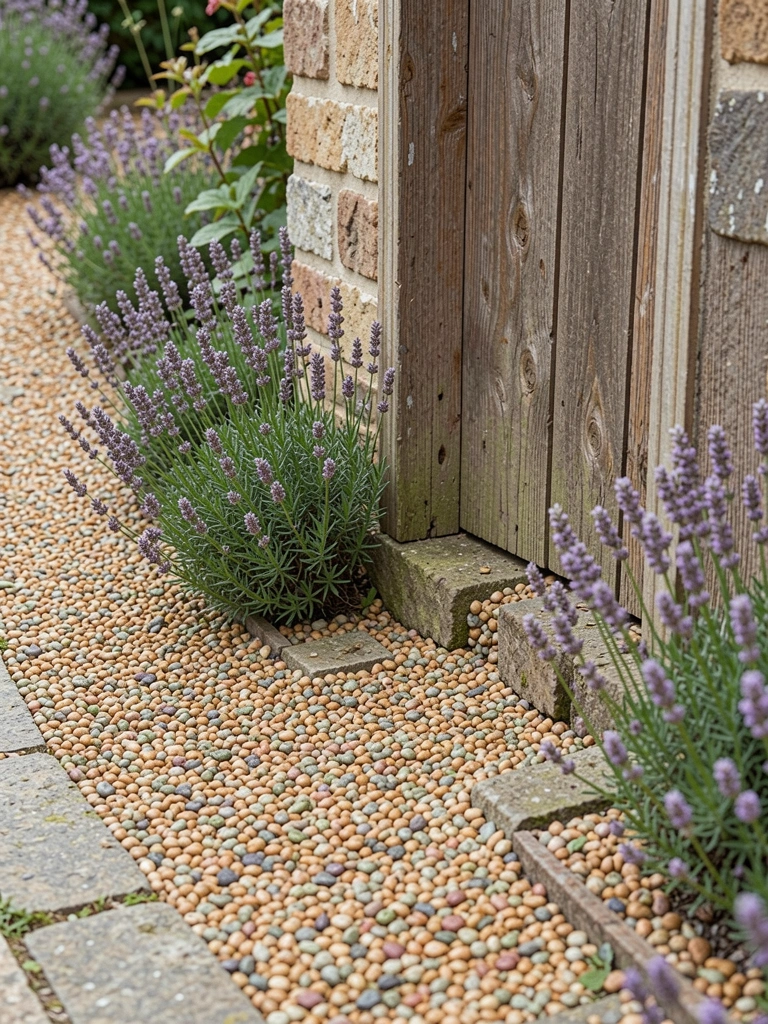
I start low, right at the shed's feet. A thin gravel path softens the hard edges. It pulls your eye in gentle.
Without it, the shed looks planted flat on dirt. Gravel adds that lived-in feel right away. Things shift visually—now it breathes.
People miss how paths set mood. Skip straight to plants, and it crowds. Avoid piling gravel too thick; one inch does it.
I rake it smooth but not perfect. Walk it daily at first. It settles cozy fast.
Step 2: Layer Low Plants Around the Edges
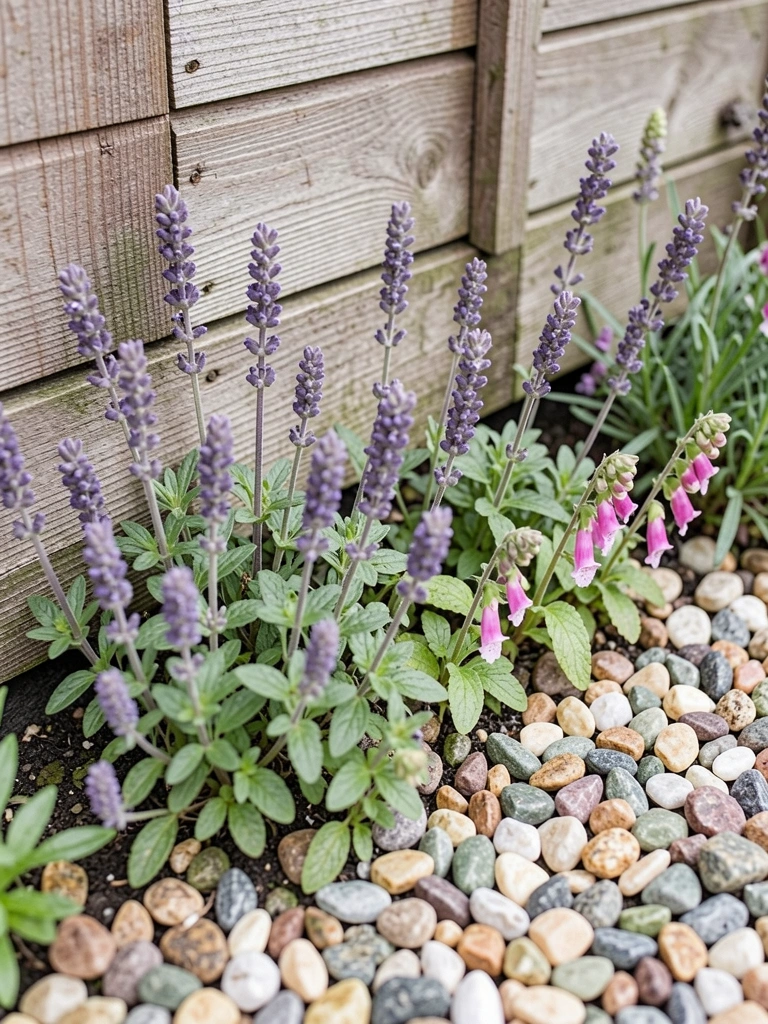
Next, I tuck in low growers like lavender. They hug the base, fill gaps without pushing out.
The shed warms up here. Colors soften—purple blooms against wood. It feels rooted now.
Most overlook spacing. Plant too close, they fight for sun. Leave elbow room; they spread happy.
I water deep once a week. Mistake? Forgetting drainage holes in pots nearby. They rot roots quick.
Step 3: Add Vertical Climb for Height
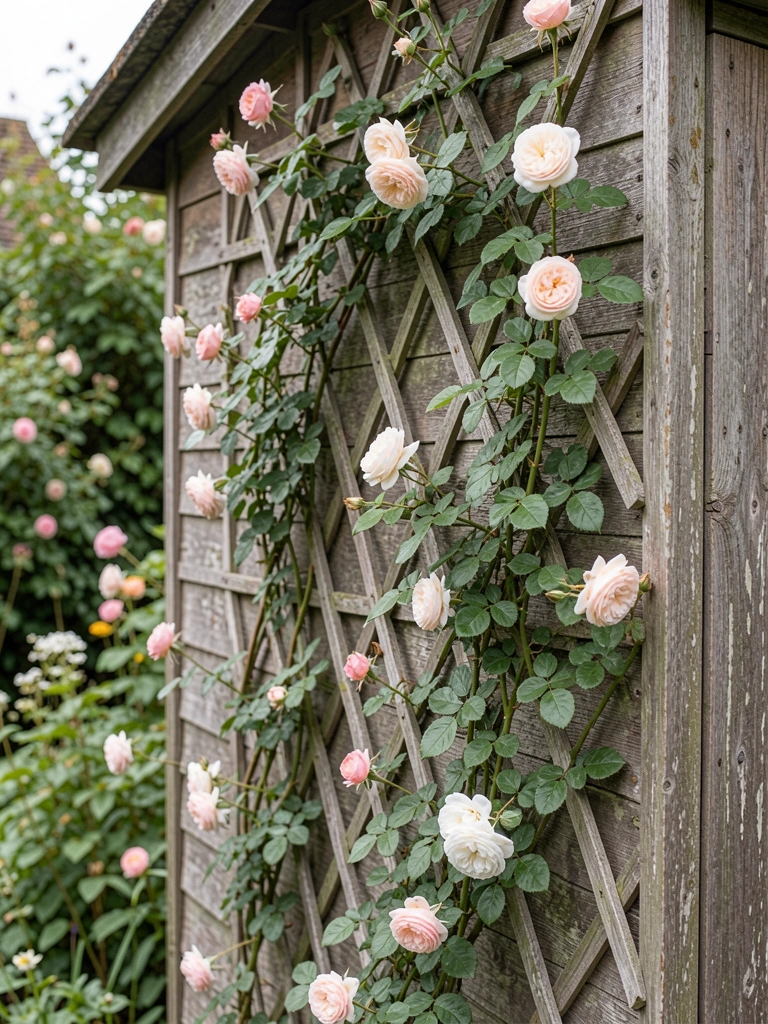
I fix the trellis high on one side. Climbing roses go there—they pull up soft.
Now the shed has flow. Vines break the boxy lines. Balance tips right; it's not squat anymore.
Insight: climbers hide flaws best. Folks pick wrong ones—too heavy. Roses stay light.
Don't nail trellis dead center. Off to the side draws the eye around. Tie loose at first.
Step 4: Fill Mid-Layer with Spilling Blooms
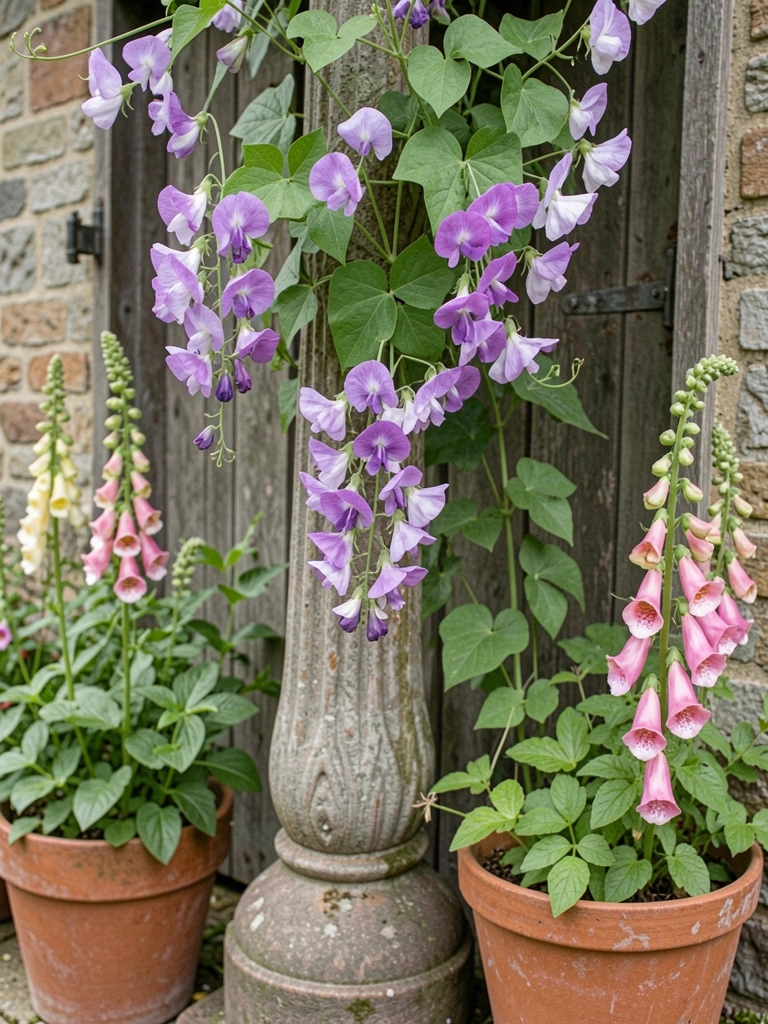
Obelisks go mid-height with sweet peas. They spill over pots, add that cottage tumble.
Visual shift: layers stack now. No bare spots. Feels full but open.
Missed bit: mid plants bridge low and high. Without, it looks leggy. Avoid overplanting; pick three types max.
I snip spent blooms weekly. Keeps it tidy without trim.
Step 5: Balance with a Rest Spot
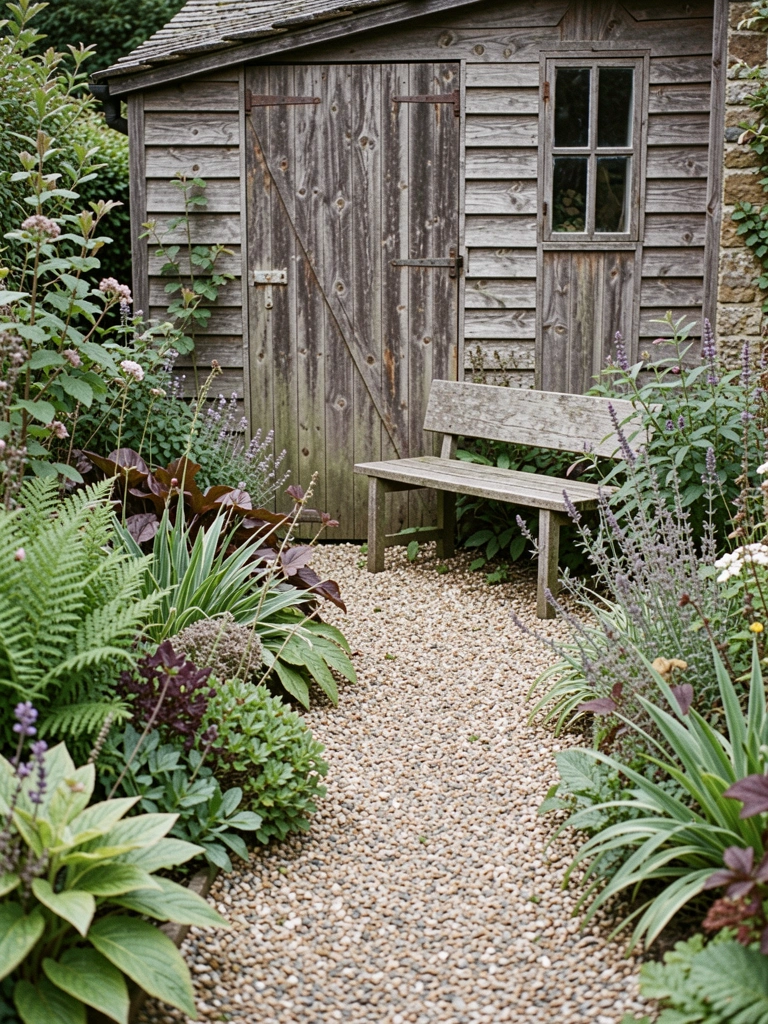
Last, a gravel loop to a bench. It invites pause, frames the shed.
Everything settles. Flow pulls you close, then out. Intentional without try-hard.
People forget the sit spot. Garden feels for show. Don't crowd the bench; let plants frame it.
I shift pots seasonal. Mistake: fixed spots block doors.
Pairing Plants for Year-Round Interest
I mix heights and bloom times around my shed. Roses climb summer. Lavender holds spring and fall.
Foxgloves spike early, sweet peas trail late. No dead seasons.
- Roses for height and repeat blooms.
- Lavender for scent and evergreen base.
- Sweet peas for quick color fill.
This keeps eyes happy all year.
Softening Edges with Paths and Gravel
Gravel paths curve natural. They lead without straight lines.
I widen at the door. Narrows to plants. Feels welcoming.
Bullets for ease:
- One-inch layer max.
- Rake curves weekly.
- Mix in moss for age.
Edges blur soft now.
Low-Maintenance Cottage Touches
I deadhead once a week. Prune climbers light in winter.
Pots swap easy for tired spots.
- Mulch base yearly.
- Water deep, less often.
- Let some self-seed.
It stays comfortable with little work.
Final Thoughts
Start with just the gravel path. See how it shifts things.
You've got this—one layer builds the feel.
My shed sits happy now. Yours will too. Dig in slow.
Leave a Reply