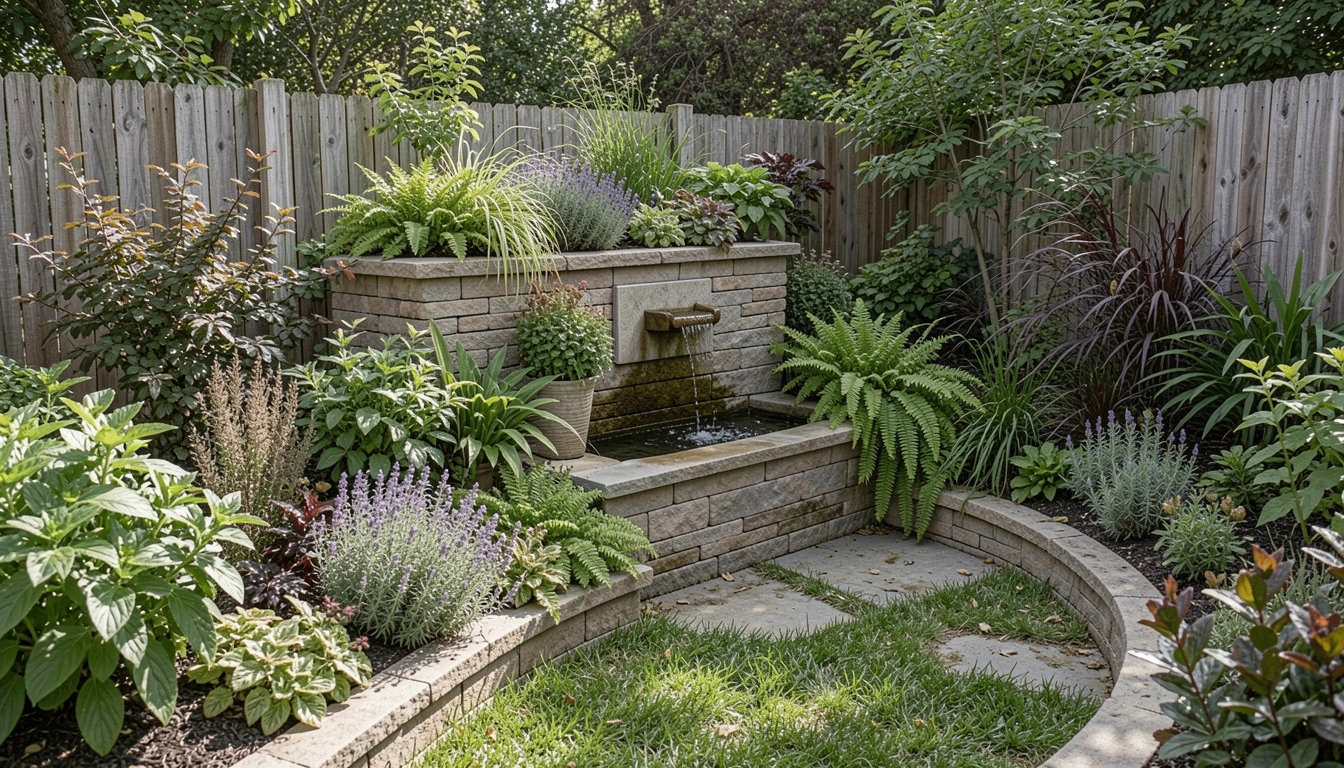
I stared at that blank wall in my backyard corner. It felt flat, like the garden stopped short. Water sounds could fix it, but every fountain idea looked wrong—too big, too plain.
I'd tried slapping one up before. It just hung there, disconnected. Plants nearby fought it.
This time, I slowed down. Placement first. Now that wall pulls you in.
How to Design Garden Wall Fountain
This is the method I use every time a bare wall needs focus. You'll end up with a fountain that settles into the garden, water flowing naturally against stone and green.
What You’ll Need
- 12-inch terracotta wall fountain with pump
- Solar-powered fountain pump kit, 5-gallon capacity
- Assorted river rocks, 5-pound bag, smooth gray
- Drip irrigation tubing kit, 1/2-inch, 50 feet
- Fern plants, Boston variety, 1-gallon pots x3
- Hostas, medium green, 1-quart pots x4
- LED wall sconce lights, warm white, bronze finish
- Galvanized steel basin, 24×12 inches
Step 1: Pick the Wall Spot That Pulls the Eye
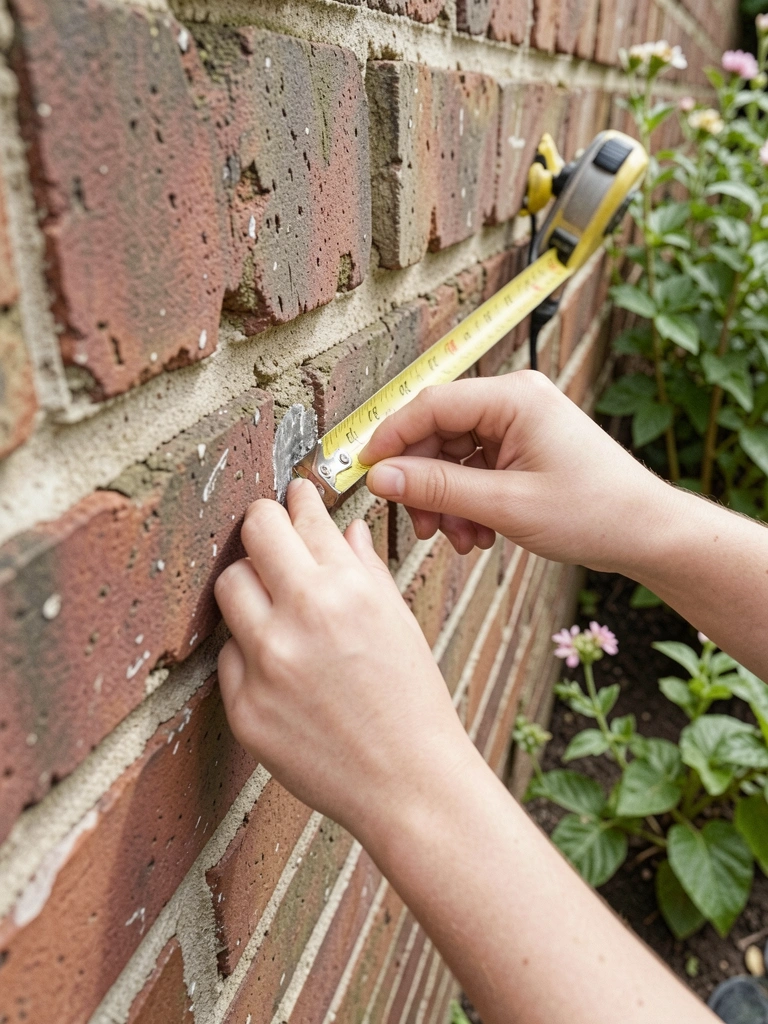
I walk the garden first. Stand back. Which wall catches your eye from the path? That's your spot. Not too hidden, not screaming at you.
Mark it low—eye level when seated nearby. The fountain grounds the view. Visually, the wall wakes up; empty space shrinks.
People miss how light hits here at dusk. Test it. Avoid high placement; water splashes feel off from above.
Step 2: Layer the Base for Steady Flow
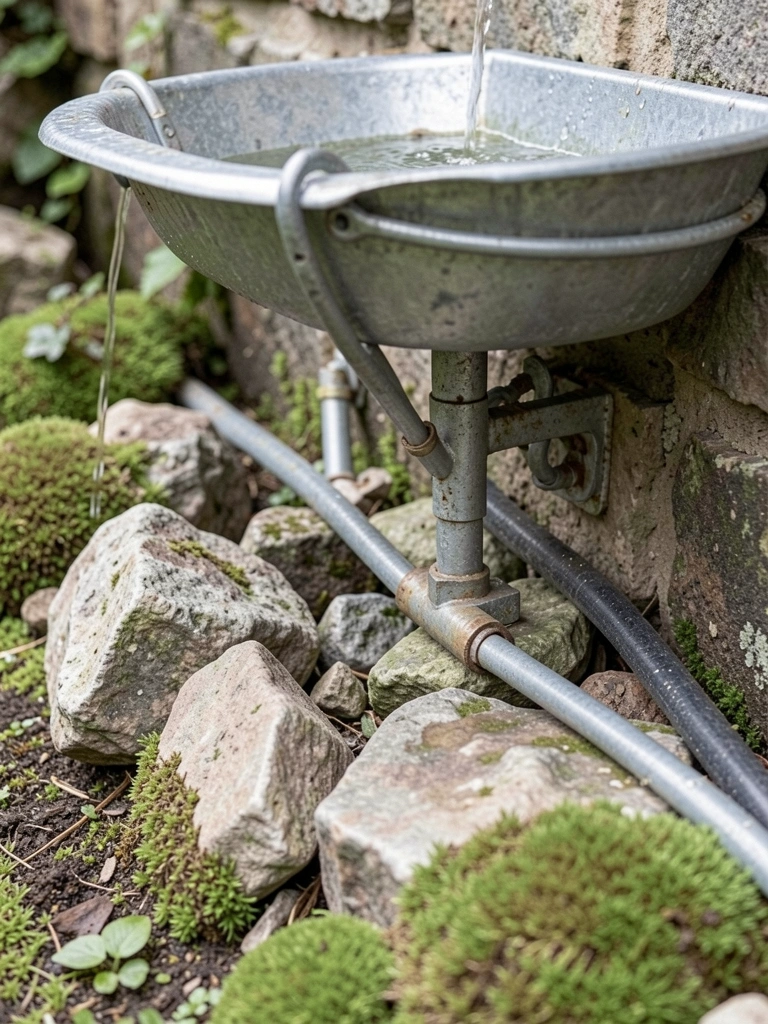
I set a shallow basin below. Fill with river rocks. Water cycles back quiet, no splash mess.
Now the wall feels anchored. Sound layers in—gentle trickle over stone.
Insight: Match basin width to fountain. Too narrow, water overflows. Skip plastic liners; rocks breathe better.
Step 3: Hang the Fountain for Natural Lean
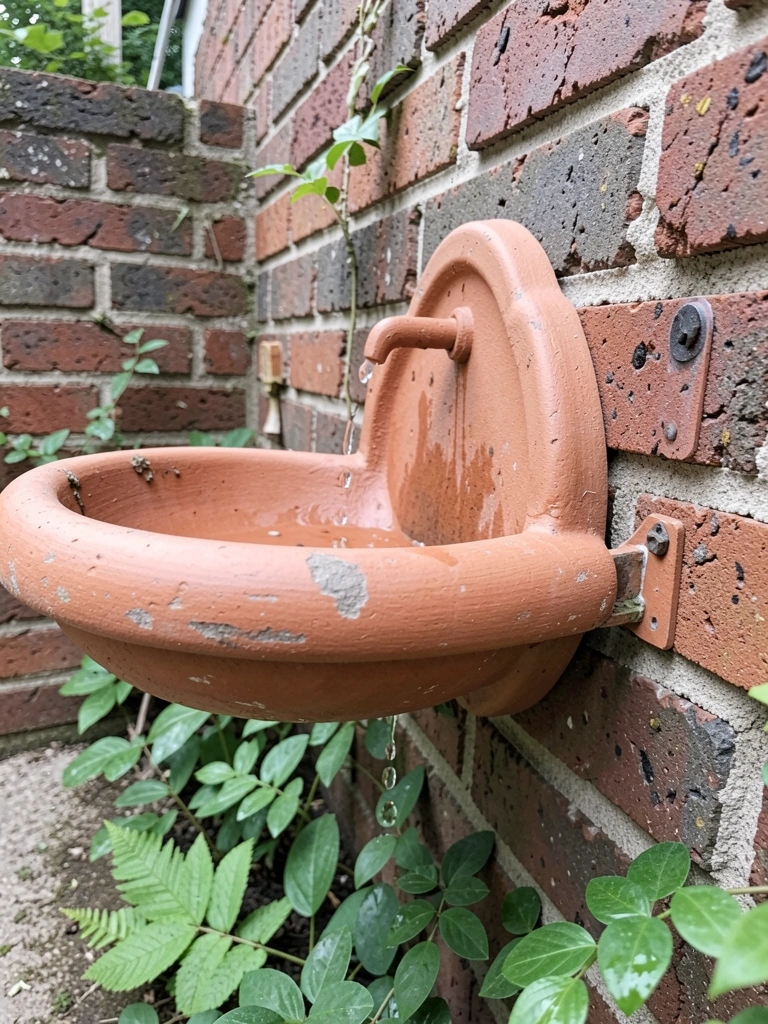
I lean it out slight from the wall. Brackets hidden. Water sheets down even.
The garden shifts—motion draws you closer. Balance emerges.
Most forget the tilt. Flat hangs look stuck. Don't overtighten; let it settle like it's always been there.
Step 4: Frame with Low-Growing Greens
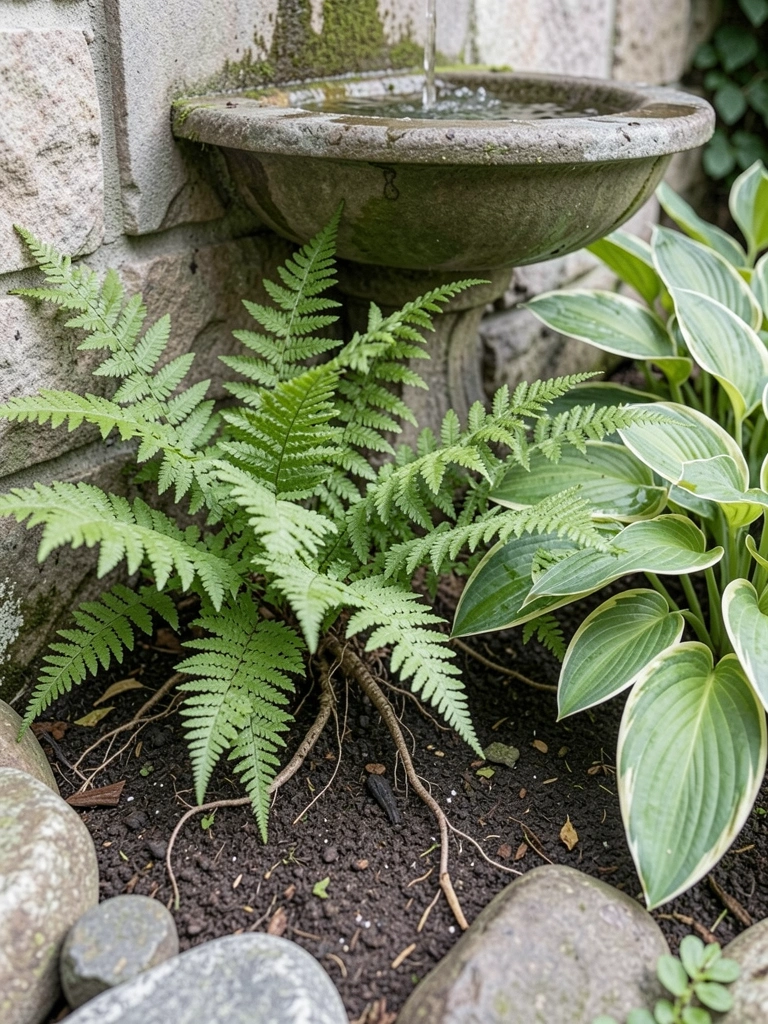
I tuck ferns left, hostas right. Low mounds soften edges. Drip line keeps them happy.
Texture builds—rough stone, soft leaves. The fountain nestles in.
Missed often: Plant roots can't compete with basin drain. Space them. Avoid tall stuff; blocks the flow.
Step 5: Test the Rhythm Day and Night
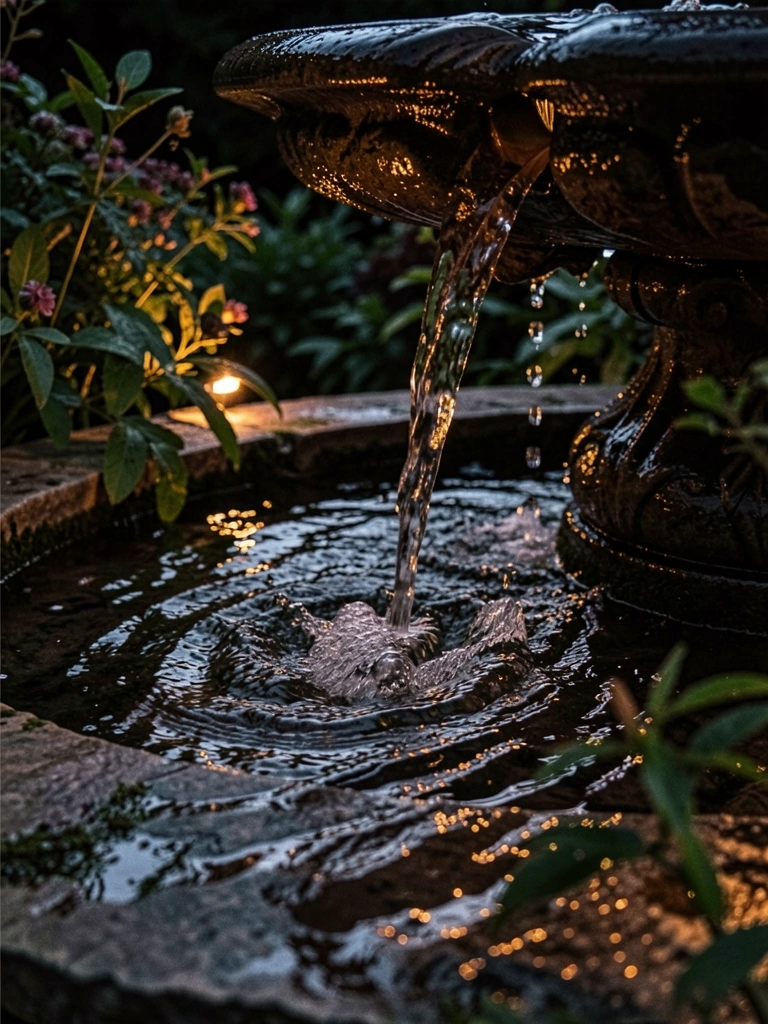
Run water full. Walk around. Adjust pump for steady pour, not gush.
Light changes everything—sconces warm the wet stone at night. Feels alive all day.
People rush this. Listen first. Wrong pump size echoes harsh; size down.
Step 6: Step Back and Nudge for Balance
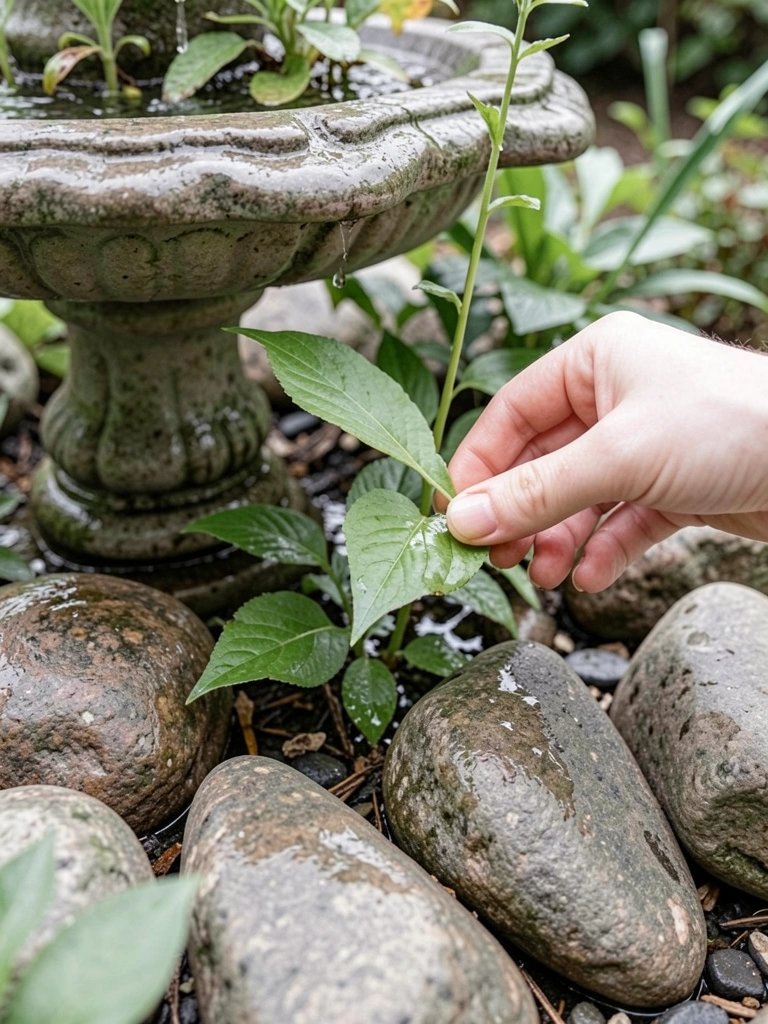
Sit with coffee. See gaps? Add a rock, shift a leaf.
Now it's balanced—water leads, plants echo. Lived-in calm.
Insight: Balance is felt, not measured. Avoid symmetry; one side fuller invites touch.
Plant Choices That Settle In
I stick to shade lovers near walls. They thrive without fuss.
- Ferns drape soft, hide pump lines.
- Hostas mound steady, blue-green cools stone.
- Add one heuchera for color pop—bronze leaves warm terracotta.
These fill without overwhelming. I've pulled out too-vigorous ones before.
Keeping the Flow Year-Round
Winter hits, but mine keeps murmur.
Drain pump yearly. Rocks stay.
- Mulch plants deep.
- Swap annuals in pots for bulbs come spring.
It feels continuous, not seasonal stop.
Lighting That Fits Without Flash
Sconces low, warm glow. No bright spots.
I wire simple—solar if possible. Test angles; shadows play on water.
One pair flanks perfect. More muddies the quiet pull.
Final Thoughts
Start with one wall you pass daily. It'll draw you back.
You've got this—trust the feel over perfect plans.
That trickle becomes garden heartbeat. Simple as that.
Leave a Reply