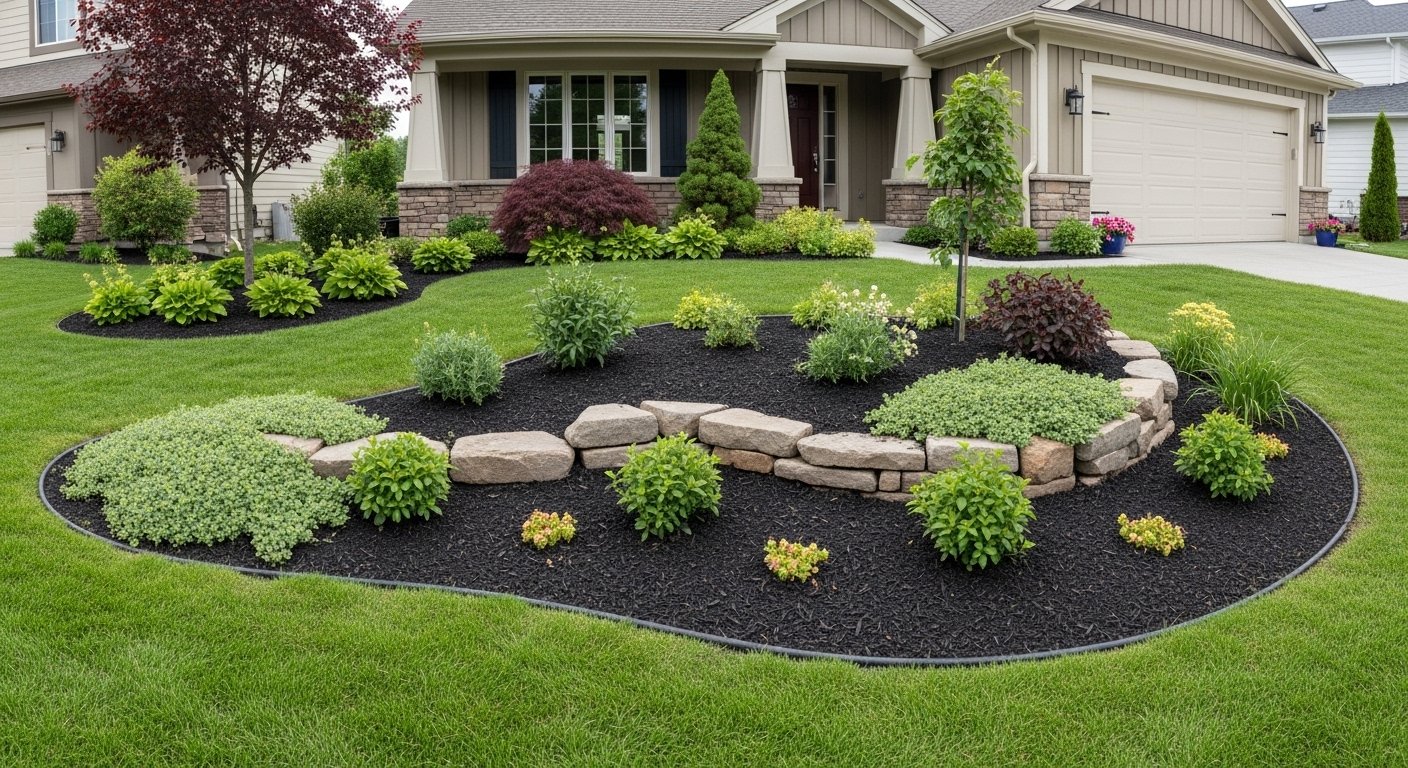
I’d stand at the curb and feel unsure what to do next. The grass was fine, but the whole front felt indecisive and a little cheap.
I learned to look for simple cues—edges, repeat plants, and an entry that reads intentional. Those small fixes make a yard read expensive without a big bill.
How to Make a Front Lawn Look Expensive On A Budget
This method shows how to read your lawn like a room. You’ll learn how to create balance, anchor the entry, and add small, repeatable accents for a cohesive, polished look.
What You’ll Need
- Dwarf boxwood (4-inch potted plants) — for clean, low hedging
- Perennial salvia/nepeta combo pack — for reliable mid-height color
- Ornamental grass clump (Pennisetum-style) — for soft vertical texture
- Low evergreen groundcover (creeping thyme) — for neat, low filler at edges
- Ceramic entry planter, 12-inch neutral glaze — to anchor the doorway
- Dark bark mulch (2 cu ft bag) — for a tidy, unified bed look
- Low-profile solar path lights (warm white) — for subtle evening glow
Step 1: Plant a low, neat edge to frame the space
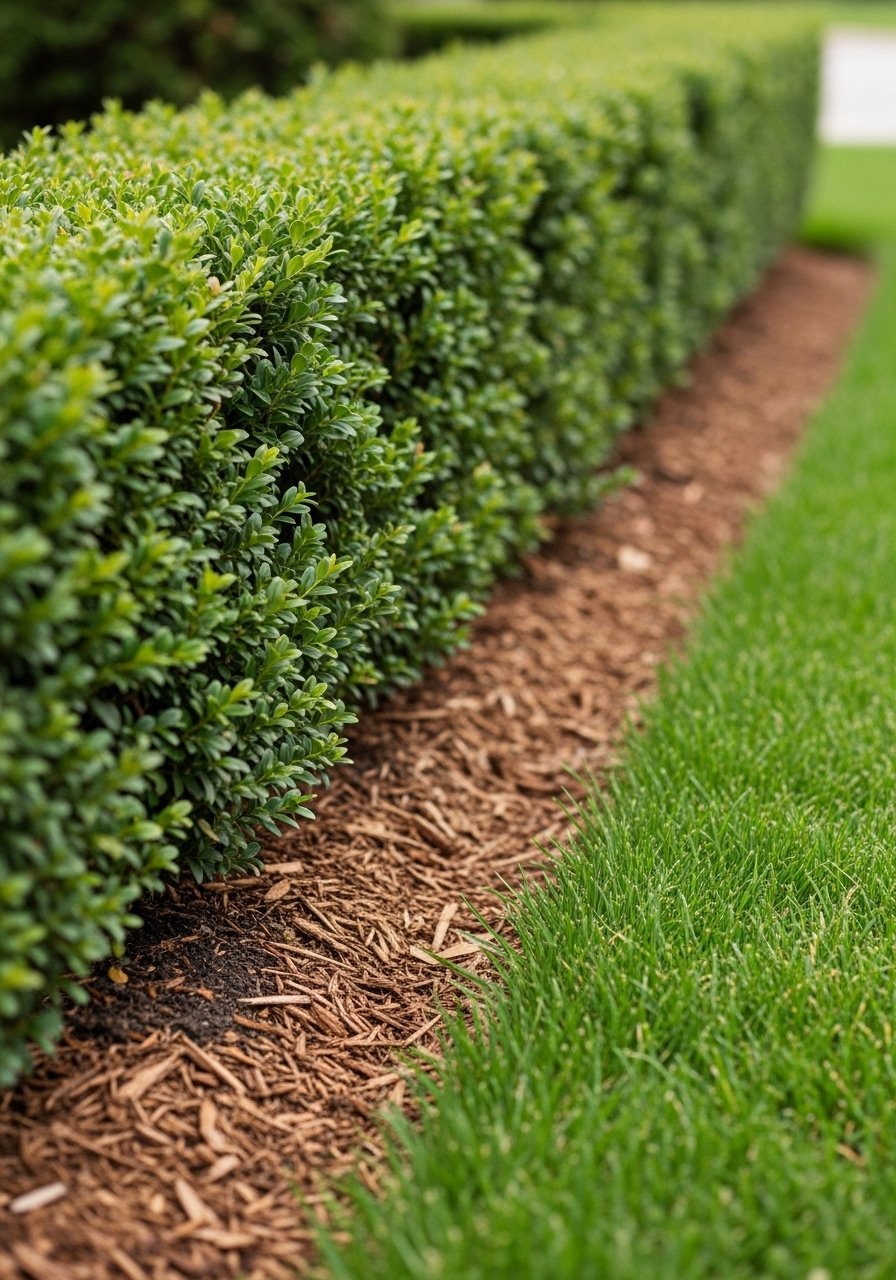
I start by giving the front a clear frame. A low row of dwarf boxwood along the walkway or bed edge reads tidy and intentional. It’s like a picture frame for the house.
Visually the space gains a crisp foreground and a repeated line your eye can follow. People miss how much small, regular shapes calm a view. Avoid planting a hedge too tall or too far from the path—then it looks crowded, not refined.
Step 2: Layer three heights for depth and balance
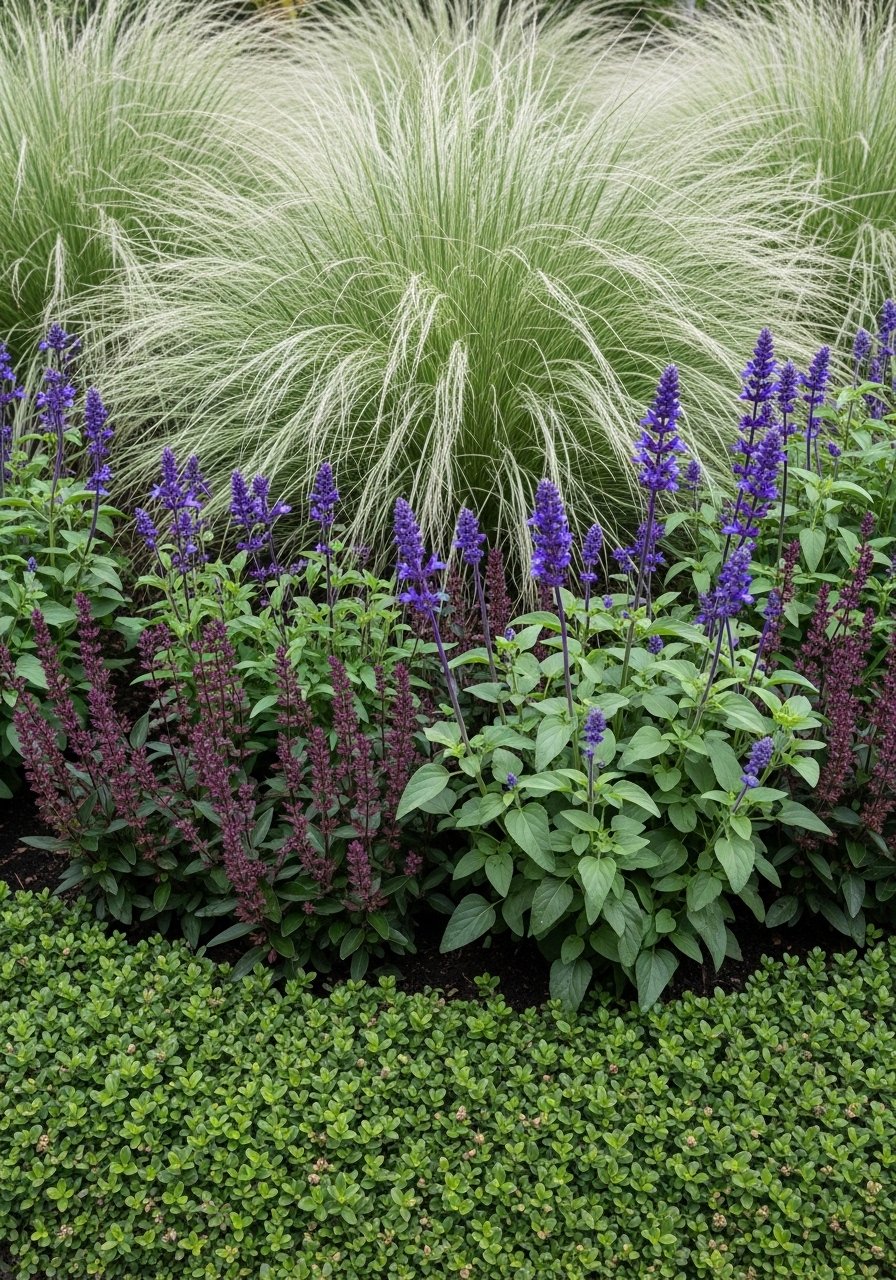
I arrange plants in low, mid, and tall layers. Creeping thyme at the front, salvia and nepeta in the middle, grass at the back or flanks give depth and rhythm. Repeat each plant in groups for cohesion.
The change is immediate: beds look full but ordered, not random. A common miss is mixing too many species at once. Don’t overcomplicate the palette—stick to three or four reliable plants and repeat them. And don’t forget scale; small houses suit smaller, tighter plantings.
Step 3: Anchor the entry with matching planters
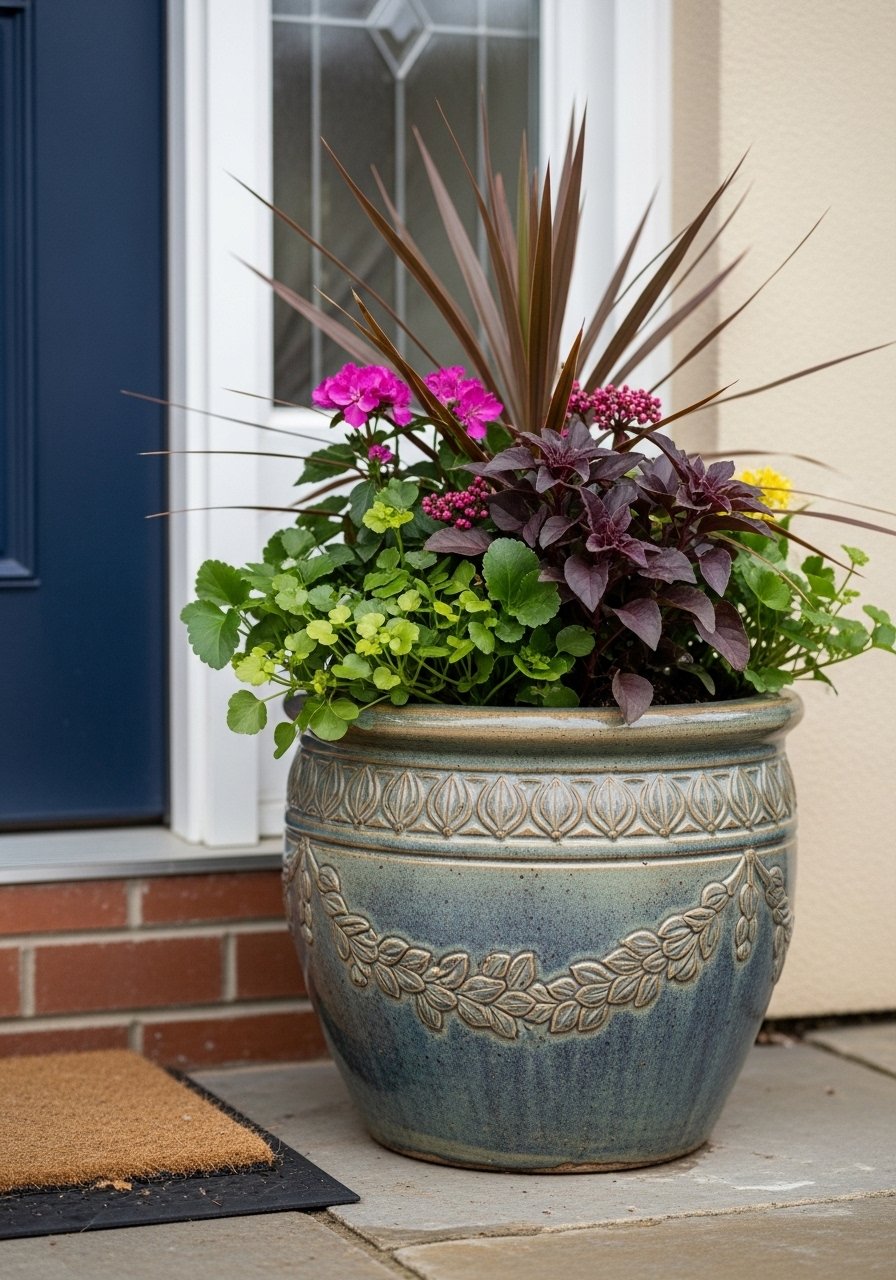
I use a single pair of well-chosen planters by the door. Matching ceramic pots with clean lines read purposeful and finished. Switch the plants seasonally, but keep the same containers for continuity.
This makes the whole entry feel curated instead of thrown-together. People often pick tiny, mismatched pots that look like afterthoughts. The small mistake is choosing overly ornate or brightly colored pots that compete with the house—neutral tones read more composed.
Step 4: Use dark mulch and clean bed lines
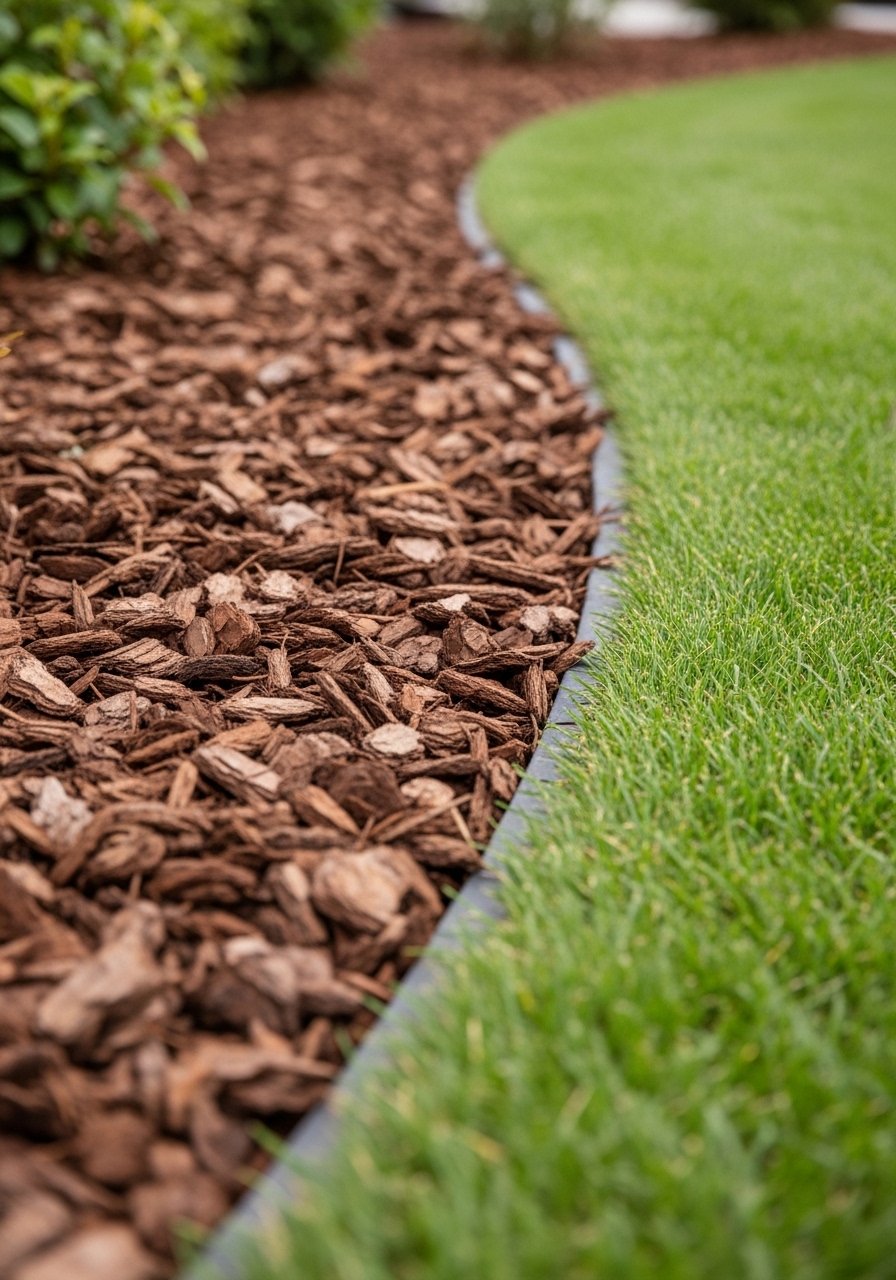
I lay a thin, even layer of dark mulch and sharpen the bed edges. Dark mulch makes foliage colors pop and hides bare soil, giving beds a uniform look. A clean curve or straight edge makes the whole lawn look considered.
This visual unifies everything. People miss that edging is part of the design, not extra work. Avoid piling mulch against stems or leaving ragged plastic edging visible—both shout “temporary” instead of “intentional.”
Step 5: Add subtle lighting and a lived-in finishing touch
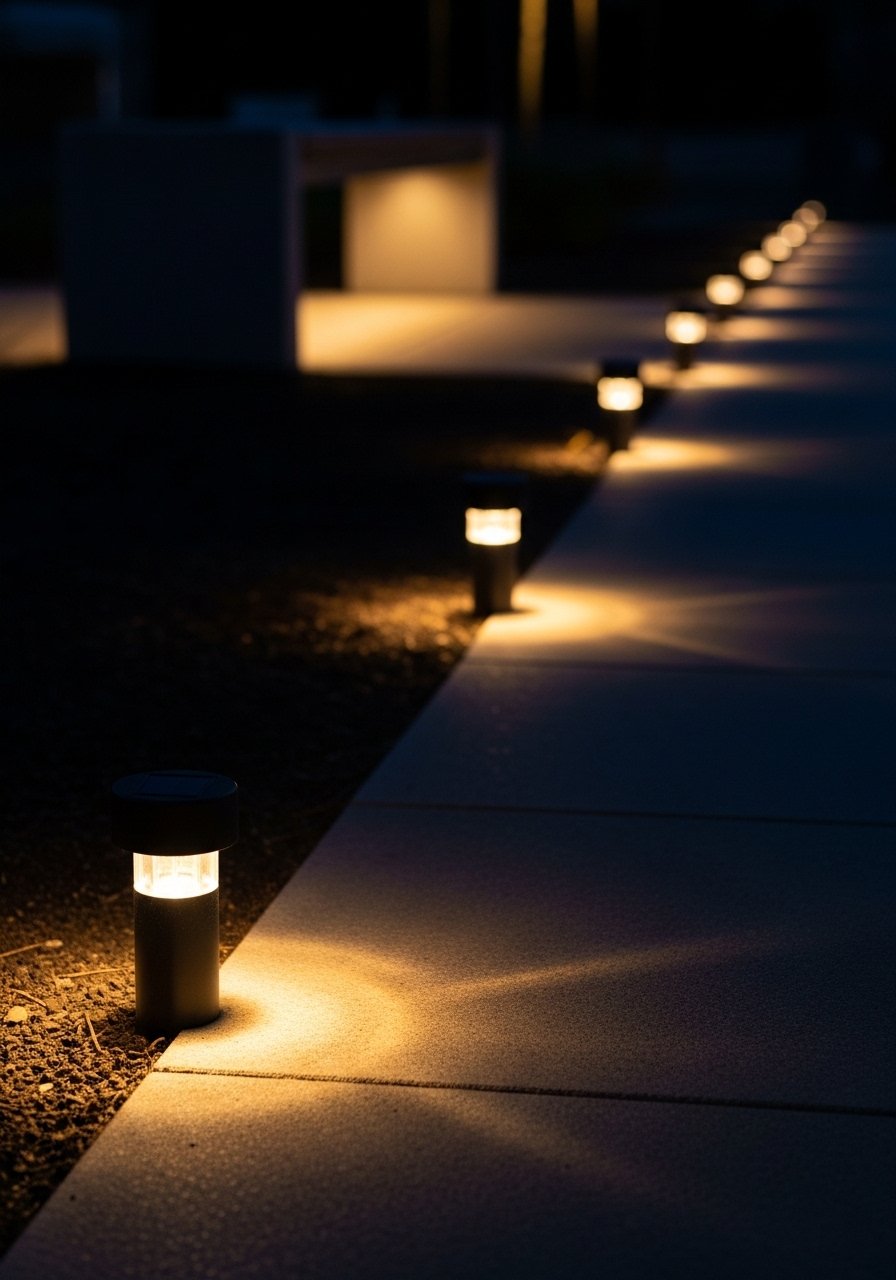
I place low-profile solar lights along the walk and add one simple accent like a bench or a single sculpture. Soft evening light and a lived-in element push the space from neat to welcoming.
This makes the yard feel maintained and used. A common miss is too many different light styles or bright, blue LEDs. Keep fixtures few, warm, and consistent. Don’t clutter with novelty decor; a single, quality piece reads more composed.
Balancing Symmetry and Flow
Symmetry calms the eye at the entry. I aim for pairs—two planters, two lights, two matching shrubs—to create a composed look. Symmetry doesn’t mean everything must be mirrored; gentle asymmetry in plant grouping keeps it natural.
Flow matters more across the whole lawn. Curved beds and a clear sightline to the door make movement easy. Repeat materials and plant types to guide the eye across the space.
Choosing Plants That Read “Put-Together”
Pick plants that hold shape and repeat them. Boxwood, salvia, and a single ornamental grass give personality without chaos. Consistency in foliage color helps the eye rest.
Favor plants that look tidy with little fuss. If you don’t have time to prune, choose naturally neat varieties and spacing that shows intention even when imperfect.
Finishing Touches That Look Expensive
Choose a small number of high-impact finishes: dark mulch, matching planters, and a consistent light style. Those accents create a cohesive look without big spending.
A clean routine—weed, refresh mulch, prune lightly—keeps the lawn reading expensive over time. It’s the maintenance, not the money, that sells the look.
Final Thoughts
Start with one bed or the entry. Small, confident changes beat a scattered overhaul. Repeat a few elements and your eye will read the whole lawn as intentional.
You don’t need expensive plants or a contractor. You need restraint, rhythm, and a place that feels lived-in and looked-after.
Take one corner this weekend and finish it well.
Leave a Reply